Residential Sewage Treatment Systems
Great For You and Your Environment
We design site specific Septic Systems for Residential land owners
And we assist with Council Permits
For residential septic systems, the number of bedrooms, the soil type and effluent disposal area is taken into consideration when designing your system. Most councils will require a Land Capability Assessment (LCA) as part of the permit process. If you a geotechnical company in your local area to help you with your LCA, we might be able to recommend one. This is necessary for the preparation of the documents you will need to submit to your council.
To make the permit process simple for you, we also assist with the council permit application. We require two copies of your site and floor plans, your Land Capability Assessment and payment of the council permit fees.
We are in contact with councils Australia-wide every day and intimately understand the terminologies that may otherwise seem complex to people who are unfamiliar with the process. Septic Tank Regulations vary from state to state so if you’re not about your local council regulations please follow the link.
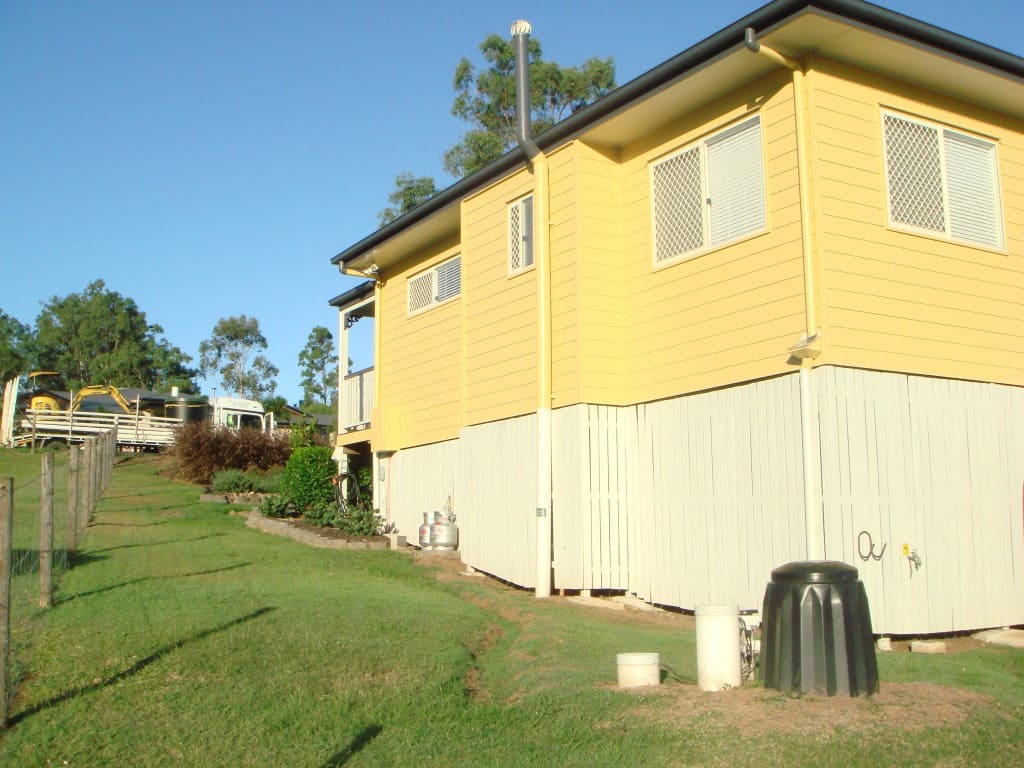
If your residential site is on a hill, a non-powered gravity septic system may be suitable. On flat sites we install a small sump pump to disperse the worm liquid from the system to the effluent disposal area. The pump is only activated on demand for a couple of minutes when required.
The advantages of our Residential Septic Systems
Servicing your system
Unlike most waste treatment companies which charge a quarterly or annual service fee, Worm Farm Waste Systems will visit your site 6 months after you start using the system to check that everything is working correctly.
All we ask is that you advise us 6 months after commencement of use so we can schedule your check-up service. This first visit is carried out at no cost to you. Subsequent visits are recommended every two years for which there is a service call out charge.
Who takes care of the installation?
Company trained and accredited installers who are directly employed by this company will install your residential sewage and wastewater treatment system. We do not engage the services of sub-contractors or the local plumber.
Our installer will arrive at your site in a truck which will carry an excavator and all other equipment needed to install your system. Our installer meets with you, or your builder, on the day of installation to discuss the final location of the Worm Farm Waste System.
No smells
Our Domestic Septic Systems do not have a septic smell. The liquid which leaves the system is clear, odourless, aerated and contains worm castings and worm eggs which will benefit your garden.
Worm Farm Waste Systems also specialises in commercial septic tank systems and rural septic tanks. Talk to us about your waste processing needs today.
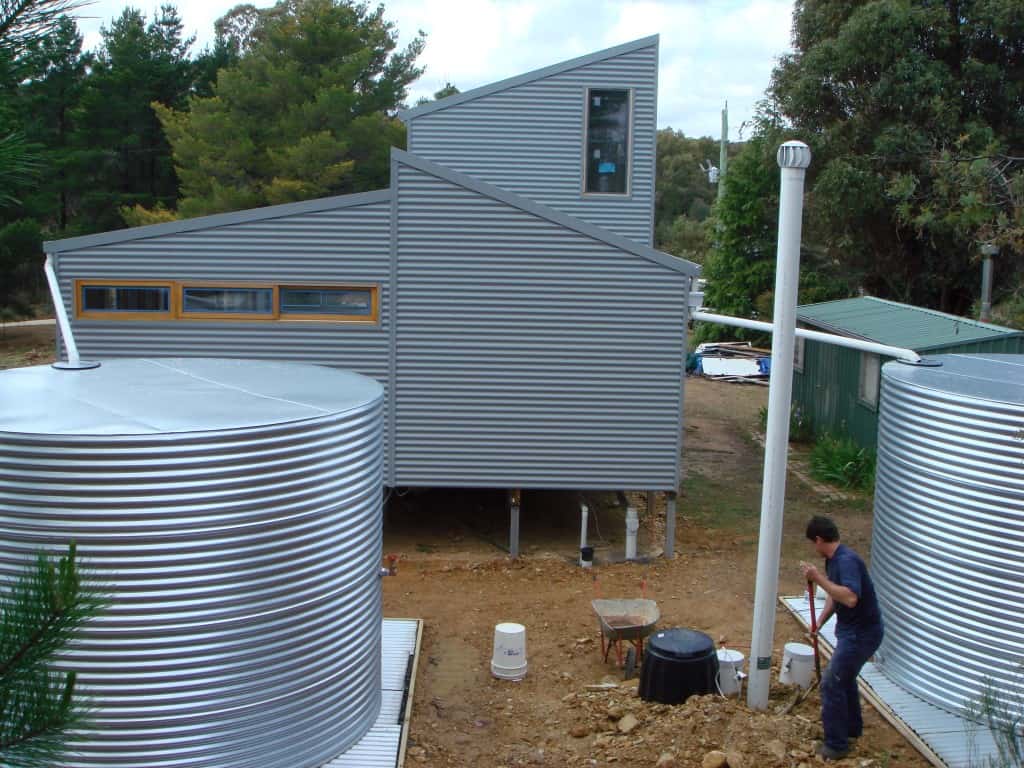
Residential Septic Systems that are environmentally sustainable
Specialising in worm technology and environmental waste solutions since 1996, Worm Farm Waste Systems is providing residential homes with a minimal maintenance, no-smell wastewater treatment system to effectively minimise the need for organic waste disposal.
Up to 90% less organic waste could leave your site for landfill. Imagine if every household in the country saved up to 90% of the organic waste they dispose into landfill, we would not have the landfill issues we now have.
Using a single chamber, non-mechanical system, this simple worm technology processes residential sewage, wastewater and organic waste, converting it into a reusable clear, aerated liquid fertiliser for your plants.
Need to speak to an Expert!
For more information on residential septic systems take a look at some of our feature projects.
People Are Talking About Our Eco-Friendly Septic System
Blue Mountains 2011
We built our new farm house in the Megalong Valley in the Blue Mountains in 2011 and installed a worm farm at the recommendation of our builder. It was considered so much better than a septic system for a range of reasons.
It has operated smoothly, and with no problems since then.
I would strongly recommend the system for anyone in our circumstances.
It is testament of the strength of the product and it’s relevance that you are still operating after 26 years.
Thank you
John A
Best Choice We Ever Made
Hello Liz. Thank you so much for your quick reply. Yes, we will send all the information to the new owner. We are sad to leave our little block, with the worm farm the best choice we ever made for the block. But due to health and family issues, we have moved to Brisbane and now dealing with the city sewerage system.
Thank you so much, especially to Alan who was so wonderful and to Doug when he installed our system. Doug loved him. Thank you again
Myrna
The Smart Choice
We’ve had our system for over 2 years now and it’s been the smart choice of the septic systems we looked at. The running costs have been minimal and its needed no maintenance. It’s been excellent using the system day to day including the disposal of our organic waste.
Big plus for the environment as well. Highly recommend this septic tank system to anyone. NSW Central Coast
Helen K
Here’s Why Over 3000 Aussie's Choose
Our Truly
Organic Septic System
- Established in 1996
- Over 3000 systems installed in Australia
- Single chamber with low site impact
- Low running costs. $20 per year based on a 4 bedroom house
- You will not be locked into a service contract
- 10 Year System Warranty
- No smells
- Operates 20 times faster than septic or aerated systems in processing sewage solids
- Our pumps are very quiet & only activated by demand
- Residential, Commercial & Rural Systems
- Approved in VIC, NSW, SA, QLD & NT
- We help with Council Permit Applications - ‘We talk council speak’
- Suitable for all climates, desert, tropical, alpine and temperate
- Company employed installers are used to install your system
- Environmentally friendly and sustainable
- Natural liquid fertiliser is added into your soil, opening up clay soils 100mm vertically per year
- Can reduce household organic waste by up to 90%
- Many site specific effluent dispersal options
- We can retrofit to your existing system
- Aerobic system with a wind driven vent to super charge your septic tank
- Weed control – Dispose of ragwort, dock, thistle
All our residential systems come with a Child Proof Entry
Learn about our Natural Biological Wastewater Treatment Plant for residential sewage, household wastewater and organic waste
Our eco-friendly Residential Septic Systems have a huge void capacity for organic waste, unlike other systems that can only accept very small quantities and generally only through an insinkerator. With years of extensive research and development, our natural, eco-friendly septic tank system offers a simple solution which uses minimal energy for disposing of organic waste.
An entry chute is installed above ground allowing for easy disposal of organic kitchen and garden waste including:
- Dairy
- Citrus
- Onions
- Garlic
- Meat
- Fruit
- Table scraps
- Vegetable peelings
Additional food sources for the worms include
- Dead heads from annuals
- Rose Flowers
- Agapanthus
- Thistles
- Dock
- Patterson’s Curse
- Capeweed
- Weeds need the soil shaken from their roots
Other weeds that produce seeds which require containment to prevent spreading will all add an additional food source for the worm.
All wastewater and sewage is processed and kept on site and re-used as an underground liquid fertiliser for your plants. This natural liquid fertiliser is disposed of high in the soil to promote growth in the most biologically active soil area. Worm castings from the system are absorbed into the soil combined with processed wastewater to help your trees, shrubs, roses, annuals, lawn and hedges to thrive.
The liquid fertiliser also contains worm eggs. Washed out of the system, they hatch and the worms live in the disposal areas scouring and aerating the soil. Even heavy clays will be opened up 100mm vertically and 50mm on each side per year by the worms and microbes.